

Trekker resources
Everything you need before, during & after your trek
From first-timer fitness plans to technical altitude guides — this is our library for prepared trekkers. Bookmark it. Share it. Use it.
Getting started
New to trekking? Start here.
A four-step path from curious to trail-ready — no experience needed.
-
1
Choose your difficulty level
Trek grades at TGIT range from Easy (suitable for first-timers with basic fitness) to Challenging (technical terrain requiring prior high-altitude experience). Each trek page lists the grade, daily elevation gain, and an honest fitness benchmark.
-
2
Build your base fitness
Start 8–12 weeks before departure. A weekly routine of brisk walks, stair climbs, and progressive weekend hikes will take most people from couch to confident. Our free 8-week prep plan is in the downloads below.
-
3
Sort your gear
You don’t need to buy everything — TGIT provides tents, sleeping bags, and kitchen equipment on all departures. Our personalised packing list (grade-specific) tells you exactly what to bring and what to leave home.
-
4
Get medically cleared
Treks above 3,500m require a basic medical check. We recommend a GP visit, altitude sickness awareness, and — for treks above 4,500m — a consultation on preventative medication (Diamox). Download our medical prep guide below.
Guides & articles
Deep-dives from the trail
Practical, field-tested knowledge to help you arrive informed and prepared.
The 8-week Himalayan prep plan
A progressive training schedule designed around the specific demands of multi-day trekking — sustained uphill, load-bearing, and high altitude. Week-by-week breakdown with rest days built in.
Read the full guideAcute mountain sickness: what you must know
AMS affects 25–40% of trekkers above 3,000m. This guide covers early symptoms, the golden rule of descent, acclimatisation schedules, and when medication helps versus hinders.
Read the full guideWhat to pack (and what not to)
The most common mistake first-time trekkers make is over-packing. This guide breaks down layering systems, footwear, the one item most people forget, and how to keep your pack under 12kg.
Read the full guideA complete guide to Indian trekking permits
Inner Line Permits, forest department fees, national park entry, Protected Area Permits for Ladakh and Arunachal — demystified. What you need, where to apply, and how long it takes.
Read the full guideBest seasons for every Himalayan region
Monsoon, post-monsoon, winter snow, and pre-summer windows vary significantly across the Himalayas. A region-by-region calendar to help you choose the right month for the right mountains.
Read the full guideLeave no trace in the Indian Himalayas
Practical ethics for the trail — waste management, campfire rules, interaction with wildlife, respectful behaviour in mountain villages, and how to support local porter communities.
Read the full guideFree downloads
Print-ready resources for your trek
Keep the essentials close at hand, from your first training week to the trailhead.
8-week trek fitness plan
PDF · 4 pages
Ultimate trekking packing checklist
PDF · 2 pages · Grade-specific versions
AMS symptoms & response card
PDF · 1 page · Laminate-ready
India trekking permit reference guide
PDF · 6 pages · 2025 updated
Medical clearance form for high-altitude treks
PDF · Fillable · For your GP
Frequently asked questions
Quick answers, no fuss
Still planning? These are the questions first-time trekkers ask us most often.
Ask a question01Do I need prior trekking experience?
Not for our Easy and Moderate grades. If you can walk briskly for 4–5 hours with a light daypack, you’re ready. Challenging and Strenuous grades require documented prior high-altitude experience.
02What’s included in the trek fee?
All departures include experienced guides and support staff, camping equipment (tent, sleeping bag, mat), all meals on trail, permits and forest fees, and a first-aid kit with an emergency oxygen cylinder. Flights, travel insurance, and personal gear are excluded.
03Is solo trekking allowed on TGIT departures?
All our treks depart as small groups (maximum 12 people). Solo travellers are welcome and frequently join group departures — it’s one of the best ways to meet fellow trekkers.
04What happens if someone gets altitude sickness?
Our guides are trained in Wilderness First Response. If a trekker shows moderate or severe AMS symptoms, we descend immediately. We carry portable altitude chambers (Gamow bags) and supplemental oxygen on all high-altitude treks above 4,000m.
05Can I rent gear through TGIT?
Yes. We offer gear rental add-ons at checkout — trekking poles, gaiters, down jackets, high-altitude sleeping bags, and waterproof shell jackets. All rental gear is inspected and cleaned between departures.
06What is your cancellation policy?
Cancellations made 45+ days before departure receive a full refund. 30–44 days: 75% refund. 15–29 days: 50%. Under 15 days: no refund, but the booking can be transferred to a future departure. We strongly recommend travel insurance covering trip cancellation.
Trek glossary
Know the mountain language
A field guide to the words you’ll hear while planning and walking Himalayan trails.
- Acclimatisation
- The physiological process of adapting to reduced oxygen levels at high altitude. Usually requires 1–2 rest days at intermediate elevations on any trek above 3,500m.
- AMS
- Acute Mountain Sickness. Headache, nausea, and fatigue caused by insufficient acclimatisation. The only reliable cure is descent.
- Bugyal
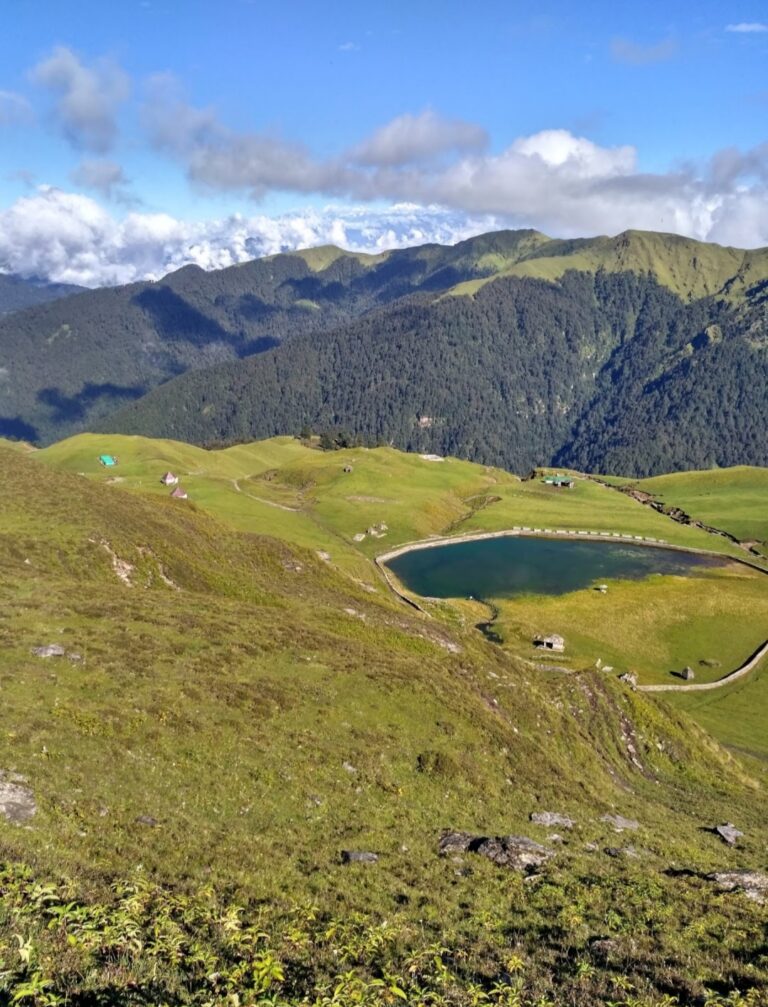
- High-altitude alpine meadows found in the Garhwal and Kumaon Himalayas, typically above 3,000m. Among the most beautiful terrain on any Uttarakhand trek.
- Campsite elevation
- The altitude at which you sleep — typically 300–500m lower than the day’s highest point. Sleeping low helps acclimatisation even on summit push days.
- ILP
- Inner Line Permit — required for Indian citizens and foreign nationals to enter restricted areas in Ladakh, Arunachal Pradesh, and parts of Sikkim.
- Technical trek
- Any route requiring the use of ropes, ice axes, crampons, or fixed lines — beyond standard walking. TGIT labels all technical treks clearly in the difficulty section.